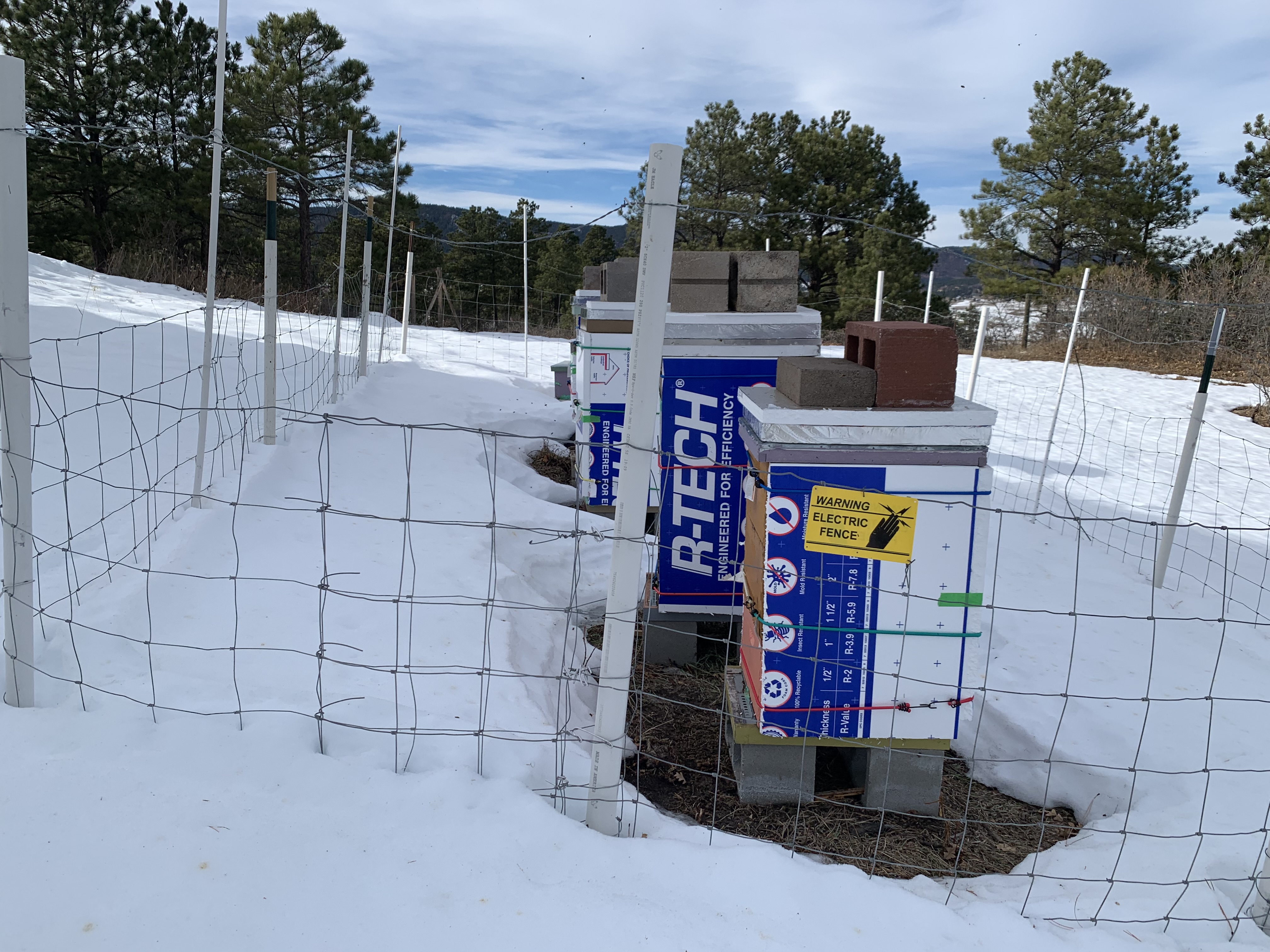

As this Colorado Winter has been another roller coaster ride of highs and lows, I am anxious to see how the snowflakes will settle on our Winter Survival percentages. Commercial beekeepers have already began reporting high colony deaths this year (seventy percent and more in some cases), yet I am sure there will still be a lot of package bees to purchase after the almond pollination. Our hives are still at least a month out from being in the clear of surviving Winter and then beginning there Spring build up. In my opinion, it has been a super cold and snowy Winter this year, even the Southern states got in on the snow this year, but Colorado always needs the moisture. As we roll into February, the snow and cold has not released there grip, but hopefully that changes soon.
We went into this Winter with fifty five hives, and still have a goal of ultimately managing around sixty five hives, until I retire from education. In addition to overwintering double nucleus’ hives as usual, I have become a huge fan of overwintering side by side resource hives from Dadant. Thus far eight colonies have perished, and all of them except three appear to be a Varroa Destructor load, not enough Winter Bees, or mite related viruses that ultimately culled them out. Of course, this has to do a lot with there genetics, and the fact that they could not deal with Varroa Mites and the viruses they vector on there own without beekeepers’ intervention. Which brings me to all of the new things I attempted over the last two years to see if it would decrease my “mite related” Winter loss percentage. I started counting mites (alcohol wash) in hives that were not growing, booming, and during robbing season. As well as, counting mite levels on our Treatment Free hives to see how low/high of a count/percentage they are managing. Some preliminary thoughts/data follows…
- All hives had/have some level (percentage) of Varroa Destructor in there counts
- Beekeeper’s mite “threshold” differ on when to take action, but can be as low as one mite per 300 bees in an alcohol wash
- Some treatment free hives had/have a higher percentage/”threshold” of mites compared to others, and appeared to have no ill effect on them or there Winter survival
- Counting mites on fifty five hives is time consuming. Counting mites pre and post is time consuming. Now I know why some beekeepers don’t count mites at all, and just treat with various products prophylactically and hope for the best, but I don’t think that is best practice
- Most hives treated with Api-Bioxal did survive Winter, but not all
- Api-Bioxal is super time consuming & must be done on a 21-24 day cycle when brood is present for ultimate effectiveness
- Most treatment free hive’s mite counts remained stable, or went up and down on there own without any interventions, infestations, or virus overloads
There is still plenty of Winter left, so it will be interesting to see how the rest of it shakes out and how it will affect the remaining forty seven hives. I typically begin to see the first pollen of the year coming in the middle of February, which signifies brood rearing will start getting ramped up in most colonies. I am sure the next warm weather stretch will officially kick this off. My plan for the year is to continue to count mites, breed queens from treatment free colonies, use resource hives as brood factories, and use Api-Bioxal as a tool for genetics that would die if left to there own devices.
Teri
February 14, 2025 at 11:28 amI’m not a beekeeper but found your information very interesting!
lazarusconan
February 14, 2025 at 2:33 pmThank you Teri. If you ever decide to become one, be sure to reach out.
Bill McLaughlin
February 14, 2025 at 3:17 pmOff your surviving treatment free hives what strain are they ?
I had only 2 hives in my Fountain, CO back yard. Both were very strong and had plenty of stores. On was huge in number going into winter. Both are now dead. Both were an Italian hybrid and the queens were good layers.
A friend not far from me has had the same issue. Both hives are dead.
lazarusconan
February 14, 2025 at 4:04 pmBill, most began as TF queens from structure removals. I then graft or split from them to create daughters. I also try to bring in other TF queens from other breeders yearly. It’s really hard (nearly impossible long term) to buy previously treated bees & have them live off treatments long term. Did you diagnose the dead outs? Give me a call or email if you want to discuss further.